
Last updated on February 4, 2026
##Introduction
Do you ever find yourself craving a warm, saucy dinner that feels like a hug after a long day? I remember the first time I made this dish — I nearly kissed the pan when the whole kitchen smelled like garlic and sun-drenched tomatoes. If you’re new to cooking fish or feel nervous about creamy sauces, I get it — I used to be, too. This recipe is forgiving, straightforward, and perfect for weeknights and small celebrations alike. If you like hearty pasta and tender fish, you might also enjoy a rich pasta bake like beef stuffed shells with creamy ricotta filling as another cozy option.
##A Quick Look at This Creamy Tuscan Salmon with Garlic-Parmesan Orzo Recipe
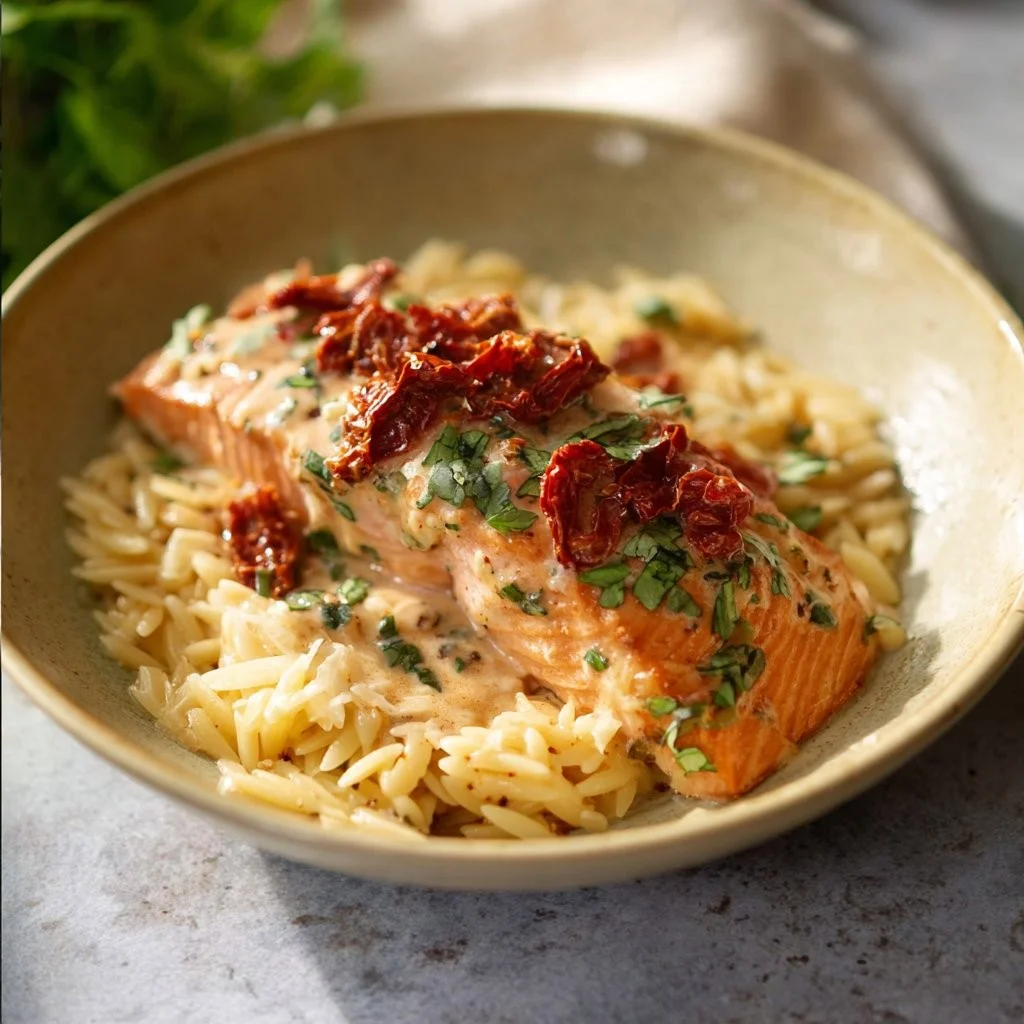
Creamy Tuscan Salmon with Garlic-Parmesan Orzo pairs juicy, pan-seared salmon with a luscious cream sauce studded with sun-dried tomatoes and spinach, tossed with garlicky Parmesan orzo. The main players are salmon and orzo — one gives you rich, flaky protein, the other offers comforting, pillowy starch. It’s a balanced weeknight dinner that’s high in protein and full of flavor but still quick enough for busy cooks. Beginners will like how each component is made separately and then brought together — simple steps that feel impressive on the plate. Keep reading for practical tips, easy swaps, and a step-by-step walkthrough so you can make this without stress.
##Ingredients You’ll Need for Creamy Tuscan Salmon with Garlic-Parmesan Orzo
Essentials
- 4 skinless salmon fillets (about 6 oz / 180 g each): Look for even-thickness fillets so they cook evenly. Pat dry before seasoning.
- Salt & pepper, to taste: Simple seasoning brings out the salmon’s flavor.
- Juice of ½ lemon (about 1 tbsp): Brightens the fish and the sauce.
- 2–3 tbsp all-purpose flour (for dusting): Helps create a golden crust when searing.
- Olive oil (for frying): Use a neutral extra-virgin or regular olive oil.
- 1 shallot, finely diced: Sweeter and milder than onion; melts into the sauce.
- 2 garlic cloves, minced: For that essential garlicky base.
- 1 tbsp butter: Adds richness to the sauté.
- 1 tbsp tomato paste: Gives body and a concentrated tomato note.
- 1 cup (150 g) sun-dried tomatoes in oil, chopped: They’re the star flavor—drained and chopped.
- 1/2 tsp red pepper flakes (optional): A touch of heat; skip if you don’t like spice.
- 1 cup (240 ml) vegetable broth: Base for the sauce and to deglaze the pan.
- 1 cup (240 ml) heavy cream: Makes the sauce silky and indulgent.
- 1/2 cup (50 g) grated Parmesan: Adds savory umami and helps thicken the sauce.
- 2 cups (60 g) baby spinach: Wilts quickly and adds freshness.
- 1 tbsp lemon juice: For finishing brightness.
- Fresh basil or parsley, for garnish: Fresh herbs lift the whole dish.
For the orzo:
- 1 cup (200 g) orzo pasta: Short, rice-shaped pasta cooks quickly and clings to the sauce.
- 2 1/2 cups (600 ml) vegetable or chicken broth: Use whichever you prefer; it flavors the orzo.
- 1/4 cup (25 g) grated Parmesan: Stirred into the cooked orzo for extra creaminess.
- 1 tbsp olive oil: Keeps orzo from clumping while cooking.
- 1 tbsp butter: Finishing fat for aroma and shine.
- Salt & pepper, to taste
Optional add-ons
- Fresh cherry tomatoes, halved: Stir in at the end for bursts of freshness.
- A pinch of smoked paprika: Adds a subtle smokiness that pairs well with salmon.
- A drizzle of extra-virgin olive oil or lemon-infused oil: Finishing touch.
- Toasted pine nuts: For crunch if you like texture contrasts.
- A handful of arugula instead of spinach: Peppery bite if you prefer.
Substitutions and shortcuts
- Salmon substitute: Use trout fillets or cod if you prefer milder fish; adjust cooking time for thickness.
- Dairy-free: Swap heavy cream for full-fat coconut milk and Parmesan for a dairy-free alternative, though texture and flavor will differ.
- Shortcuts: Use store-bought cooked rotisserie salmon (flaked) to skip searing — add it gently to the sauce at the end just to warm through.
- Orzo shortcut: If you’re short on time, cook orzo directly in a flavored broth in a saucepan while you make the sauce to save time; just watch the liquid so it doesn’t stick.
- Broth choices: Use low-sodium broth and adjust salt at the end to avoid over-salting.
##How to Make Creamy Tuscan Salmon with Garlic-Parmesan Orzo Step-by-Step
I’ll walk you through this like we’re cooking together in my kitchen — clear steps, timing tips, and little checks so nothing goes wrong. Before you start, lay out everything: measure ingredients, chop the shallot, mince the garlic, and drain the sun-dried tomatoes. Having everything ready makes a big difference.
Prep the orzo
Bring 2 1/2 cups (600 ml) of vegetable or chicken broth to a gentle simmer in a medium pot. A simmer (small bubbles around the edge) is better than a rolling boil for even cooking.
Add 1 cup (200 g) of orzo and a pinch of salt. Stir once to prevent sticking. Cook for about 8–10 minutes, checking for “al dente” — tender but with a slight bite.
Drain any excess liquid if there’s still a little broth left. Stir in 1 tbsp olive oil, 1 tbsp butter, and 1/4 cup (25 g) grated Parmesan while the orzo is hot so it becomes glossy and slightly creamy. Cover and set aside while you cook the salmon and make the sauce. (If you prefer, you can cook orzo in steps alongside the sauce so everything finishes together.)
Tip: For a one-pot feel, you can cook the orzo in a larger skillet with the broth, but make sure to follow package timing and adjust liquid as needed.
Season and flour the salmon
- Pat the salmon fillets dry with paper towels — this helps them sear rather than steam.
- Season both sides with salt and pepper, then squeeze the juice of ½ lemon over the fillets.
- Lightly dust each fillet on all sides with 2–3 tbsp all-purpose flour, shaking off the excess. The flour gives a light crust and helps prevent sticking.
Sear the salmon
Heat 1–2 tbsp olive oil in a large skillet over medium-high heat until shimmering but not smoking.
Place salmon fillets in the pan, presentation side down if you want a nice sear. Cook undisturbed for 4–5 minutes per side for 6 oz (180 g) fillets, depending on thickness. You’re aiming for a golden crust and an internal temperature of about 125–130°F (52–55°C) for medium doneness; it will continue to cook a little once removed.
Remove the salmon from the skillet and place on a plate covered loosely with foil to keep warm. Do not clean the pan — the fond (brown bits) will flavor the sauce.
Tip: If the salmon is very thick, finish in a preheated 350°F (175°C) oven for 3–5 minutes after searing to ensure even doneness.
Build the Tuscan sauce
- Reduce the heat to medium and add 1 tbsp butter to the same skillet. Let it melt, scraping the bottom of the pan to lift any browned bits — that’s where the flavor lives.
- Add the finely diced shallot and sauté for about 1–2 minutes until softened and translucent. Add the minced garlic and sauté another 30–60 seconds until fragrant. Be careful not to burn the garlic.
- Stir in 1 tbsp tomato paste and cook for about 1 minute to deepen its flavor. Add the chopped sun-dried tomatoes (about 1 cup packed in oil — drain then chop) and 1/2 tsp red pepper flakes if using. Cook for another 1–2 minutes to marry the flavors.
Deglaze and add cream
- Pour in 1 cup (240 ml) vegetable broth to deglaze the pan, scraping the bottom to loosen any stuck bits. Bring to a gentle simmer for a minute to reduce slightly.
- Stir in 1 cup (240 ml) heavy cream and continue to simmer gently until the sauce begins to thicken, about 2–3 minutes. Keep the heat moderate — a rolling boil can break the cream.
- Add 1/2 cup (50 g) grated Parmesan and stir until melted and integrated into the sauce. Taste and adjust seasoning with salt and pepper.
Add greens and brightness
- Add 2 cups (60 g) baby spinach to the sauce, stirring until wilted, about 1–2 minutes. If you like, toss in a few halved cherry tomatoes here for freshness.
- Stir in 1 tbsp lemon juice to brighten the sauce and balance the creaminess. Check seasoning again — sometimes the Parmesan and sun-dried tomatoes add salt, so go easy.
Combine orzo and sauce
Add the cooked orzo to the sauce and toss gently to combine, letting the orzo soak up the flavors for a minute or two. If the sauce is very thick, add a splash of broth to reach your desired consistency.
If you want a smoother finish, stir in an extra tablespoon of butter for shine and a final touch of richness.
Note: If you’ve been following along and want extra oomph, I sometimes refer to my pantry recipes like my creamy cheese and spicy corn orzo for ideas on adding texture or spice to the base orzo.
Plate and finish with salmon
Spoon the garlicky Parmesan orzo onto warmed plates or a shallow serving bowl.
Gently nestle a seared salmon fillet on top of each portion of orzo. Spoon a little of the sauce over the salmon, and garnish with torn fresh basil or parsley.
Serve hot, and enjoy immediately while everything is warm and fragrant.
Final tip: If you need to make this ahead, keep the orzo and sauce slightly looser (add extra broth) and reheat gently on the stove, stirring in the salmon just to warm through so it doesn’t dry out.
##Common Mistakes to Avoid
Even simple recipes can go sideways if a few common pitfalls aren’t watched for. Here are the three mistakes I see a lot — and how to avoid them.
Mistake 1: Overcooking the salmon
Many home cooks leave salmon in the pan until it’s dry. To prevent this, sear on medium-high for a beautiful crust, then remove the salmon when it’s just shy of your desired doneness; it will finish cooking while resting or in the sauce. Aim for 125–130°F (52–55°C) for a moist finish.
Mistake 2: Burning the garlic or shallot
Garlic burns quickly and turns bitter. Sauté shallot first until translucent, then add garlic at the end and cook only until fragrant — generally 30–60 seconds. If your pan is too hot, reduce the heat; you want gentle sizzle, not flames.
Mistake 3: A sauce that’s too thin or too broken
If your cream is simmered at too high a heat it can separate. Keep the sauce at a gentle simmer and stir in the Parmesan gradually. If the sauce is too thin, simmer a little longer to reduce; if it’s too thick, loosen with a splash of broth or reserved pasta water until silky.
##Serving Suggestions for Creamy Tuscan Salmon with Garlic-Parmesan Orzo
This dish is rich and satisfying on its own, but a few simple sides and serving ideas make it feel like a full meal.
Start with one easy idea: pair the rich orzo and salmon with something bright, crisp, and textural to balance the creaminess.
Light salads
A crisp green salad with lemon vinaigrette (mixed greens, cucumber, and shaved fennel) offers a refreshing counterpoint. The acidity helps cut through the richness of the sauce.
Vegetables on the side
Roasted asparagus, steamed green beans, or blanched broccolini tossed with a little olive oil and lemon zest make ideal, low-effort sides that still feel elegant.
Non-alcoholic pairings
Try a sparkling water with a splash of lemon or a simple iced green tea with mint. The effervescence or tannins help cleanse the palate between bites.
##Conclusion
I hope this makes you feel ready to try Creamy Tuscan Salmon with Garlic-Parmesan Orzo tonight — it’s easier than it looks, full of cozy flavors, and flexible enough to suit your pantry. If you want a second opinion on proportions or a slightly different take, I found a similar spin on Creamy Tuscan Salmon with Garlic-Parmesan Orzo that highlights the same comforting flavors, and another friendly one-pan version is available in a lovely write-up titled Tuscan Salmon with Lemony Orzo • One Pan!. If you make this, I’d love to hear how you personalized it — leave a note or tag a photo so I can see your cozy version.
##FAQs About Creamy Tuscan Salmon with Garlic-Parmesan Orzo
Q1: How long does it take to make Creamy Tuscan Salmon with Garlic-Parmesan Orzo?
A1: From start to finish, expect about 30–40 minutes. Preparing ingredients and cooking the orzo and salmon simultaneously keeps things efficient. If you need to, you can prep the sauce ingredients ahead to speed things up.
Q2: Can I use frozen salmon for Creamy Tuscan Salmon with Garlic-Parmesan Orzo?
A2: Yes — thaw the salmon fully in the fridge overnight and pat dry before cooking. Thawing ensures even searing; if you try to cook straight from frozen, the outside may overcook before the center is warm.
Q3: Is Creamy Tuscan Salmon with Garlic-Parmesan Orzo freezer-friendly?
A3: The orzo and sauce can be frozen, but the texture of the salmon changes after freezing and reheating. I recommend freezing the sauce and orzo separately and adding freshly cooked salmon when you reheat for best texture.
Q4: Can I make Creamy Tuscan Salmon with Garlic-Parmesan Orzo lighter or dairy-free?
A4: For a lighter version, use half-and-half or a mix of milk and a spoon of cornstarch to thicken instead of full heavy cream. For dairy-free, try full-fat coconut milk and nutritional yeast in place of Parmesan, keeping in mind the flavor will shift.
Q5: What are good sides to serve with Creamy Tuscan Salmon with Garlic-Parmesan Orzo?
A5: Bright, simple sides work best — think a lemony green salad, roasted seasonal vegetables, or steamed greens like broccoli or green beans. For a touch of crunch, toasted nuts or a side of crusty bread (if you eat bread) are lovely.