Last updated on March 3, 2026
A Cozy Welcome
Do you ever get a sudden craving for something colorful and sweet that reminds you of childhood holidays? I do — especially around springtime, when I pull out pastel decorations and hunt for that perfect, easy dessert. If you’re a beginner baker who’s ever worried a layered or fancy cake would be too much, this Easter Poke Cake is the kind of recipe that makes you look like you tried hard, while staying wonderfully simple. If you enjoy poke cakes, you might also like my take on the German Chocolate Poke Cake guide, which is another cozy, crowd-pleasing option.
A Quick Look at This Easter Poke Cake Recipe
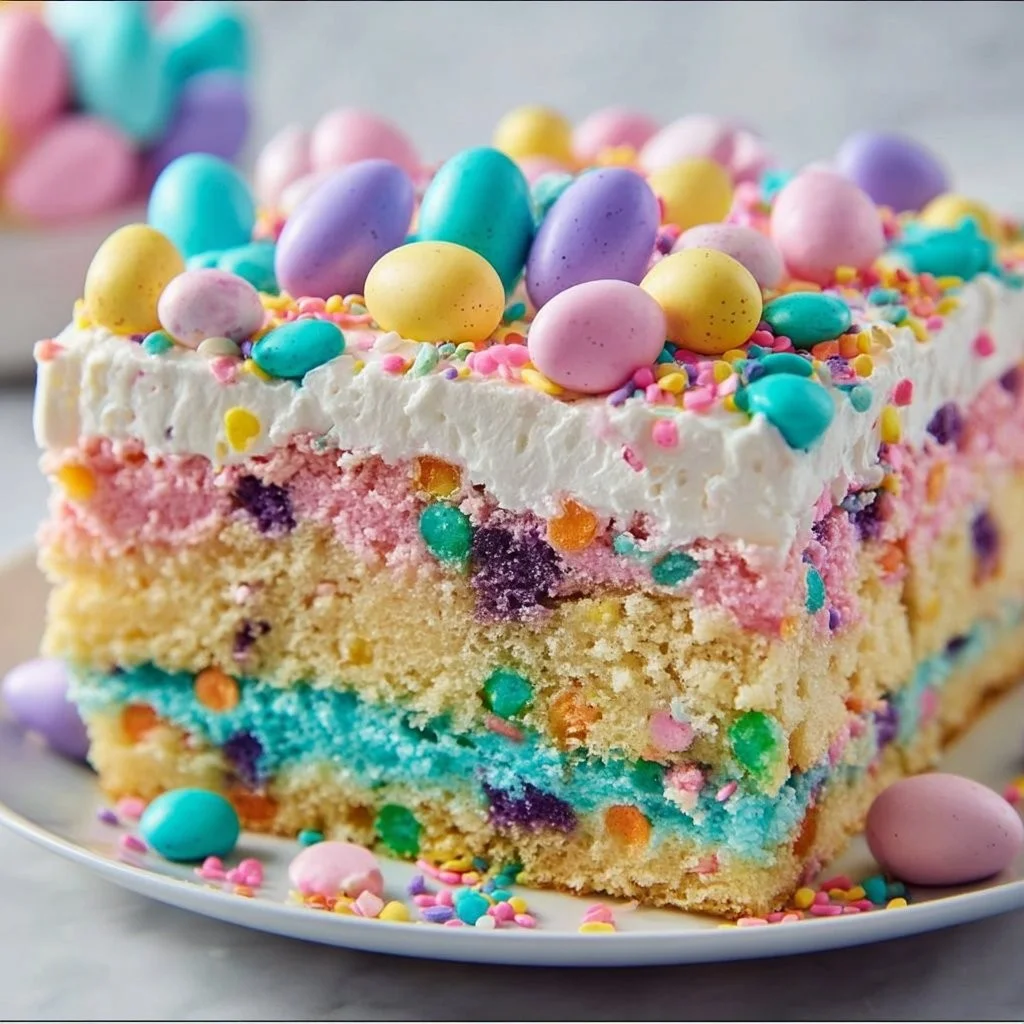
This Easter Poke Cake is built around two main ingredients: a simple white cake mix and a bright, flavored Jell-O gelatin. The colorful gelatin fills the poked holes and creates a playful, juicy texture that kids and grown-ups both love. It’s convenient because it uses a boxed cake mix and whipped topping—so it’s fast and stress-free for busy home cooks or first-time bakers. The cake chills into a refreshingly soft dessert that’s perfect for spring gatherings. Keep reading for full steps, easy tips, and little tricks that make it feel homemade.
Ingredients You’ll Need for Easter Poke Cake
Essentials
- 1 box white cake mix (plus ingredients listed on the box—usually eggs, water, and oil)
- 1 package (3 oz) Jell-O gelatin — choose festive colors like strawberry, lime, orange, or blue
- 1 cup boiling water
- 1/2 cup cold water
- 1 tub (8 oz) whipped topping (Cool Whip or a store brand)
- Nonstick spray or butter and a little flour (to grease the pan)
These are the must-haves to get the classic poke-cake effect: a tender white cake that soaks up that colorful gelatin, and a light whipped topping to finish it off.
Optional add-ons
- 1 cup mini marshmallows — toss them on top for extra fun and a soft chew
- Sprinkles or colored candy for decoration — pastel sprinkles look great for Easter
- Fresh berries or sliced fruit to serve — strawberries, raspberries, or kiwi pair nicely
- Shredded coconut — for a springy, textured finish
- Chopped nuts — if you want a little crunch (almonds or pecans work well)
These extras are all about appearance and texture. They’re optional, but they can make the cake feel more festive or more grown-up, depending on what you pick.
Substitutions and shortcuts
- Cake mix substitute: If you want to bake from scratch, you can use your favorite white cake recipe. However, the boxed mix is my shortcut for consistent results and speed.
- Gelatin alternative: You can use sugar-free gelatin for fewer calories, but note the flavor intensity may change slightly. Gelatin dessert mixes are the easiest choice for the classic poke-cake look.
- Whipped topping substitute: Use freshly whipped heavy cream (about 1 to 1 1/4 cups heavy cream, whipped with 1–2 tablespoons powdered sugar) for a fresher, less processed topping. Stabilize with 1/2 teaspoon vanilla if desired.
- Mini marshmallows: If you don’t have mini marshmallows, regular-size marshmallows can be chopped into smaller pieces.
- One-pan shortcut: Use a disposable 9×13 pan for easy cleanup if you’re taking this to a potluck.
- Protein/purpose twist: For a breakfast-appropriate protein boost in other recipes, I sometimes turn to a savory or protein-rich dish like a baked protein pancake bowl for mornings — not for this cake, but as inspiration when I want to swap treats for meals.
How to Make Easter Poke Cake Step-by-Step
I like to think of this cake as four simple stages: bake, poke, pour, chill, then finish. Below I break those stages down into kid-friendly, beginner-friendly steps so nothing surprises you in the oven.
Preheat and prepare the pan
- Preheat your oven to 350°F (175°C). I always do this first so the oven is ready the moment the batter is mixed.
- Grease a 9×13-inch baking pan thoroughly with nonstick spray, butter, or a thin layer of oil. If you like, dust lightly with flour to help the cake release cleanly. Set the pan aside.
Make the cake batter
- Empty the white cake mix into a large mixing bowl. Add the eggs, water, and oil called for on the box. I use a whisk or a handheld mixer to beat everything together for about 2 minutes until the batter is smooth and slightly thick. Scrape down the sides of the bowl so all the dry mix is incorporated.
- Pour the batter evenly into the prepared 9×13 pan. Use a spatula to smooth the top gently so it’s level. This makes sure the gelatin soaks evenly later.
Bake the cake
- Place the pan on the center rack of the oven. Bake for 25–30 minutes, or until a toothpick inserted into the center comes out clean or with just a few dry crumbs. Ovens vary, so start checking at 22 minutes if your oven runs hot.
- Once baked, remove the pan from the oven and let the cake cool on a wire rack for about 10 minutes. The cake should be warm but not piping hot when you poke it—warm enough that the gelatin will sink into the holes.
Poke the cake
- Take the rounded end of a wooden spoon, a handle of a wooden spoon, or a specially made poke tool and press holes into the cake about 1 inch apart. Go all over the surface in a grid pattern so the gelatin has many places to sink in. I find pressing about halfway through the cake depth works best — you don’t want to poke through the bottom.
Dissolve the gelatin
- Empty the 3-ounce package of Jell-O gelatin into a heatproof bowl. Pour 1 cup of boiling water over the gelatin and stir briskly until it’s completely dissolved. If you still see granules, continue stirring until smooth.
- Add the 1/2 cup cold water to the dissolved gelatin and stir to combine. This cools it down a bit and makes it ready to pour without cooking the cake further.
Pour the gelatin over the cake
- Slowly pour the gelatin mixture evenly over the cake, making sure to pour across the entire surface so the liquid seeps into each hole. Tilt the pan gently if needed to help spread the mixture. Don’t worry if the gelatin pools a little — that’s normal.
- Let the cake sit at room temperature for 15–20 minutes so the gelatin can soak in. You’ll see the colors beginning to sink into the cake and infuse it.
Chill until set
- Transfer the cake to the refrigerator and chill for at least 2 hours. I often chill it longer — 3 to 4 hours — if I have time. Chilling helps the gelatin firm up and the cake to become wonderfully moist.
Add the topping and decorate
- Once the cake is chilled and set, spread the whipped topping evenly over the surface with a spatula. Work gently so you don’t tear the cake.
- Decorate immediately with mini marshmallows, sprinkles, colored candy, shredded coconut, or sliced fresh fruit. Use whatever makes you smile — I like a scattering of pastel sprinkles and a handful of sliced strawberries for brightness. If you want a neat look, pipe the whipped topping with a star tip and then add sprinkles.
Slice, serve, and store
- Use a sharp knife to slice the cake into squares. Wiping the knife between cuts helps keep slices tidy.
- Serve chilled with extra fruit on the side if you like. Leftovers should be stored in an airtight container in the refrigerator and eaten within 3–4 days. The cake’s texture is best within the first two days, but it still tastes great after that.
Tips I use every time: Always dissolve the gelatin completely in boiling water. If the gelatin isn’t fully dissolved, some graininess may remain in the cake. Also, don’t rush the chilling — the cake needs time for the gelatin to set and for flavors to meld.
Common Mistakes to Avoid
Making poke cake is forgiving, but a few missteps can change the final texture. I’ve learned from messy attempts, so here are the most common mistakes and how I avoid them.
Mistake 1: Pouring hot gelatin directly on a hot cake
If you pour boiling hot gelatin onto a very hot cake, it can over-soften the cake and make the texture gummy. Let the cake cool for about 10 minutes after baking (it should be warm, not steaming) and let the gelatin mix cool slightly after dissolving. The gelatin should be warm to the touch, not piping hot.
Mistake 2: Not making enough holes or poking unevenly
If you poke too few holes, the gelatin won’t distribute evenly and you’ll have dry patches. Take a few extra minutes to make holes roughly 1 inch apart in a grid pattern. Even spacing makes sure every bite is flavorful.
Mistake 3: Skimping on chilling time
Skipping the fridge or rushing the set time is an easy trap. The cake needs at least 2 hours to chill so the gelatin can firm up and the whipped topping won’t slide. I often make the cake the day before a gathering so it has plenty of time to settle and the flavors blend nicely.
Serving Suggestions for Easter Poke Cake
This cake is already cheerful on its own, but how you present it can make a cozy gathering feel extra special. I like pairing it with light accompaniments that brighten the dessert plate.
Choose simple, fresh sides that complement the sweetness and colors without overpowering the cake.
Fresh fruit plate
Arrange sliced strawberries, kiwi, and blueberries around the cake slices. The fresh fruit adds acidity and contrast, which keeps the dessert from feeling too sweet. The colors also make the presentation pop for Easter brunch.
Whipped cream & mint
For grown-up guests who appreciate fresh flavor, serve extra lightly sweetened whipped cream and a few sprigs of mint. The mint adds a cooling note and a hint of sophistication while keeping the dessert approachable.
Ice cream scoop
Offer small scoops of vanilla or lemon sorbet alongside each slice. Cold ice cream is a delightful contrast to the soft, cool texture of the poke cake and makes the dessert feel indulgent without extra fuss.

Conclusion
I love how this Easter Poke Cake looks like party baking but feels wonderfully simple to make — it’s one of those recipes I return to when I want a festive dessert without the stress. It’s easier than it looks, highly customizable with colors and toppings, and forgiving for beginners who are still finding their baking rhythm. If you’d like to compare another version or see a slightly different presentation, I also bookmark the Easter Poke Cake recipe on OMG Chocolate Desserts for inspiration. Give this one a try the next time you want a cheerful, no-fuss dessert; I’d love to hear how you decorate yours.
FAQs About Easter Poke Cake
Q1: How long does Easter Poke Cake last in the fridge?
A1: Easter Poke Cake will keep well in the refrigerator for about 3–4 days in an airtight container. For best texture and flavor, I recommend eating it within the first two days, when the cake is still nicely moist and the whipped topping is fresh.
Q2: Can I use a from-scratch cake instead of a box for Easter Poke Cake?
A2: Yes — you can absolutely use a from-scratch white cake recipe. The important part is that the cake is sturdy enough to hold holes and absorb the gelatin without collapsing. Slightly denser homemade recipes tend to work best.
Q3: What gelatin flavors work best for Easter Poke Cake?
A3: Traditional fruity flavors like strawberry, lime, orange, and blue raspberry are great for Easter Poke Cake because they give bright, pastel colors and vibrant flavors. Pick shades that match your decorations and the mood you want—green or pink are especially pretty for spring.
Q4: Can I make Easter Poke Cake ahead of time for a party?
A4: Absolutely. I often make it a day ahead — assemble it completely, chill overnight, then add final toppings right before serving. Chilling overnight gives the flavors time to meld and makes serving stress-free on the day of your event.
Q5: Can I freeze Easter Poke Cake?
A5: Freezing poke cake isn’t ideal because the gelatin and whipped topping change texture after freezing and thawing. If you must freeze it, wrap individual slices tightly and expect some texture changes. I recommend making it fresh and storing in the refrigerator instead.

Easter Poke Cake
- Total Time: 45 minutes
- Yield: 12 servings 1x
- Diet: Vegetarian
Description
A colorful and easy Easter Poke Cake made with a simple white cake mix and flavored Jell-O gelatin, perfect for spring gatherings.
Ingredients
- 1 box white cake mix (plus ingredients listed on the box—usually eggs, water, and oil)
- 1 package (3 oz) Jell-O gelatin (choose strawberry, lime, orange, or blue)
- 1 cup boiling water
- 1/2 cup cold water
- 1 tub (8 oz) whipped topping (Cool Whip or store brand)
- Nonstick spray or butter and a little flour (to grease the pan)
- 1 cup mini marshmallows (optional)
- Sprinkles or colored candy for decoration (optional)
- Fresh berries or sliced fruit to serve (optional)
- Shredded coconut (optional)
- Chopped nuts (optional)
Instructions
- Preheat your oven to 350°F (175°C). Grease a 9×13-inch baking pan thoroughly with nonstick spray or butter and dust lightly with flour.
- Mix the white cake mix, eggs, water, and oil in a large mixing bowl for about 2 minutes until smooth.
- Pour the batter evenly into the prepared baking pan.
- Bake for 25–30 minutes, or until a toothpick inserted comes out clean. Let it cool for about 10 minutes.
- Poke holes into the cake with the rounded end of a wooden spoon about 1 inch apart.
- Dissolve the Jell-O in a heatproof bowl with 1 cup of boiling water, then add 1/2 cup of cold water.
- Pour the gelatin mixture evenly over the cake.
- Chill the cake in the refrigerator for at least 2 hours until set.
- Spread the whipped topping evenly over the cake and decorate with mini marshmallows, sprinkles, colored candy, or sliced fresh fruit.
- Slice the cake into squares and serve chilled.
Notes
For best taste, consume within the first two days. You can make it a day ahead of time and chill overnight.
- Prep Time: 15 minutes
- Cook Time: 30 minutes
- Category: Dessert
- Method: Baking
- Cuisine: American
Nutrition
- Serving Size: 1 serving
- Calories: 300
- Sugar: 28g
- Sodium: 350mg
- Fat: 8g
- Saturated Fat: 3g
- Unsaturated Fat: 5g
- Trans Fat: 0g
- Carbohydrates: 48g
- Fiber: 1g
- Protein: 3g
- Cholesterol: 40mg
Keywords: Easter cake, poke cake, spring dessert, colorful cake, easy dessert, festive dessert