Last updated on February 2, 2026
A Cozy Start
I still remember a rainy afternoon when I craved something warm and bright—something that felt like a hug in a mug—so I grabbed lemons, a knob of ginger, and a spoonful of honey and made this tea. If you’ve ever worried that making a simple herbal cup is too fussy for a weekday, you’re not alone—beginners often overthink steeping times or slicing citrus. I promise this Lemon and Ginger Tea is forgiving, quick, and perfect for calming a busy evening or kicking a cold to the curb. For a cozy meal to pair with it, I sometimes reach for comforting mains like the garlic herb ribeye steak and potatoes, but you can enjoy the tea on its own just as happily.
A Quick Look at This Lemon and Ginger Tea Recipe
This Lemon and Ginger Tea relies on two main fresh flavors: bright citrus from lemon (and orange) and warm spice from ginger. It’s a comfort drink that also soothes a sore throat and helps with digestion—one key benefit is how quickly you can make it with pantry ingredients. The recipe is excellent for home cooks and beginners because it uses simple steps and no special equipment. Scroll down to see the easy step-by-step guide, variations, and serving ideas that make this tiny ritual feel like a small, restorative ceremony.
Ingredients You’ll Need for Lemon and Ginger Tea
Below I break down what you need, plus a few extras you might like. The list is simple, and most of these items are pantry staples in my kitchen.
Essentials
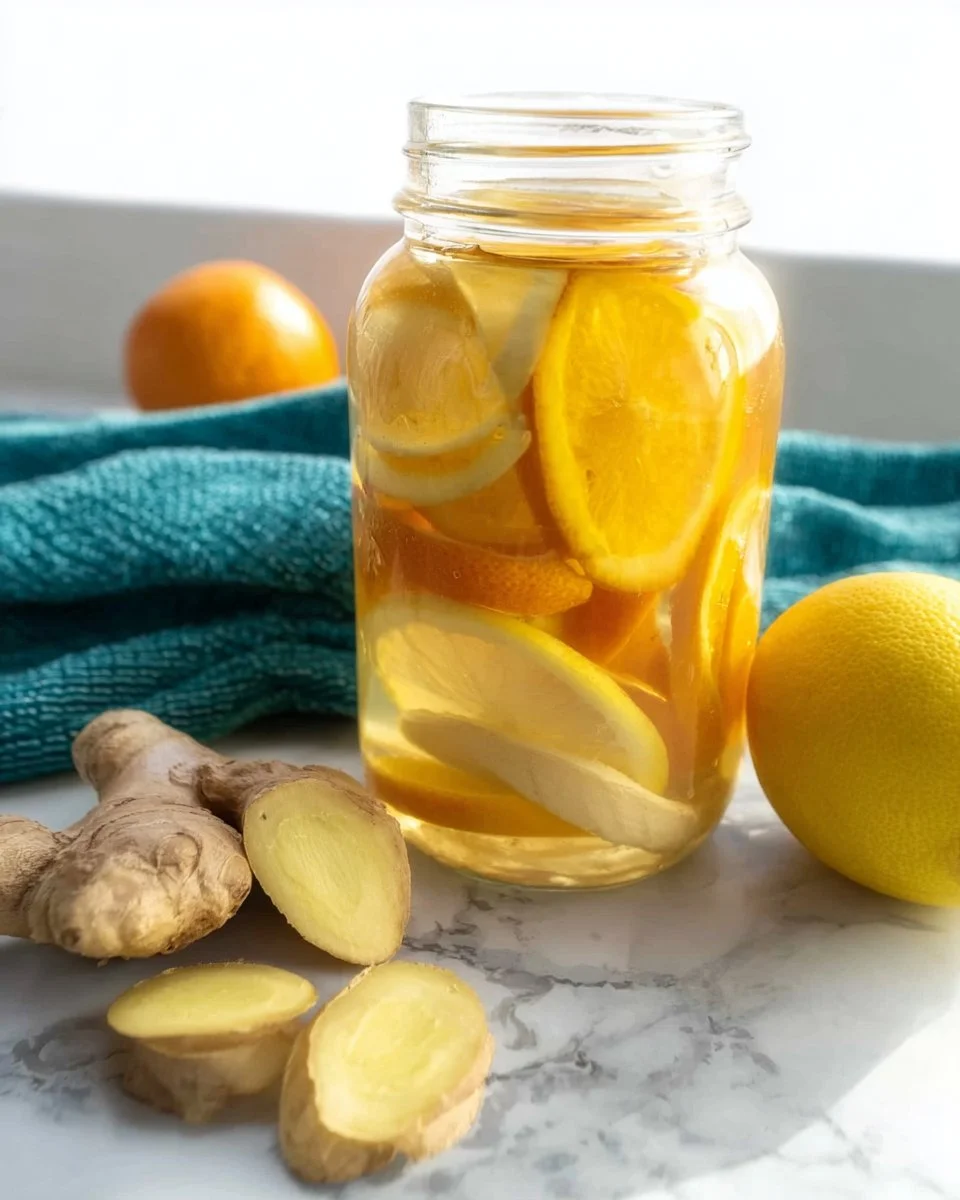
- 1 large lemon — sliced into rounds (we’ll squeeze the juice first)
- 1 large orange — sliced into rounds
- 1 piece of fresh ginger (about 1 to 2 teaspoons chopped) — more if you like a stronger ginger bite
- 1 tablespoon honey — adjust to taste; can be omitted for a tart cup
- 710 ml hot water — just off a boil
Optional add-ons
- A few fresh mint leaves for a cooling lift
- A cinnamon stick for deeper warmth and a hint of sweetness
- A pinch of turmeric for color and anti-inflammatory benefits
- A couple of whole cloves for an aromatic, spiced note
- Lemon or orange zest for extra citrus oil and fragrance
If you add these, toss them into the jar with the citrus and ginger before pouring the hot water.
Substitutions and shortcuts
- Honey substitutes: maple syrup or agave work well if you prefer a vegan option.
- Citrus swap: if you don’t have an orange, a grapefruit or clementine can work — adjust the amount so the tea isn’t overly tart.
- Ginger shortcut: pre-minced ginger paste from a jar works fine; use about 1 teaspoon per fresh teaspoon.
- Quick method: if you’re in a rush, put the sliced citrus and chopped ginger directly into a French press, pour hot water over, steep, then press and pour.
- Make it in bulk: double the ingredients and steep in a large teapot or saucepan. Store chilled in the fridge for 1–2 days and reheat portions when needed.
How to Make Lemon and Ginger Tea Step-by-Step
I like to keep the process calm and intentional—this is an easy recipe, but a few small techniques make a big difference in flavor. Read through all the steps before you begin so you’re comfortable.
Prepare a large, heatproof jar or bowl
- Choose a glass jar or heatproof bowl that holds at least 1 liter. It makes stirring and steeping easy and keeps flavors bright.
Slice the citrus
- Wash the lemon and orange well. Slice each into thin rounds, about 1/4 inch thick.
- Hold each round over the jar and give it a firm squeeze to release the juice before dropping it in. This starts the infusion by freeing the oils and juice directly into the jar.
Add the citrus slices to the jar
- After squeezing, place the rounds inside the jar. The peel contains fragrant oils that add depth to the tea, so don’t discard it.
Prepare the ginger
- Peel a small knob of fresh ginger with the edge of a spoon or a vegetable peeler. Chop it finely into small pieces. If you prefer a stronger bite, grate the ginger to release more juice and flavor.
- Add the chopped or grated ginger to the jar with the citrus.
Add honey
- Spoon 1 tablespoon of honey into the jar. If you’re using a substitute like maple syrup, add the same amount and adjust later to taste.
Heat the water
- Bring about 710 ml of fresh water to a boil. If you have a kettle, remove it from heat just as it reaches a rolling boil and let it sit for 10–20 seconds so it’s hot but not scalding.
Pour the hot water over the ingredients
- Carefully pour the hot water into the jar, covering the citrus and ginger. The heat helps dissolve the honey and pull flavors from the fruit peels and ginger fibers.
Stir to dissolve the honey
- Use a long spoon to stir the mixture well, making sure the honey dissolves into the warm liquid. This also helps distribute the citrus juice and ginger.
Steep for flavor
- Let the mixture steep for at least 5–10 minutes. If you like a stronger ginger or more citrus, steep up to 20 minutes. The longer it sits, the more concentrated the flavor.
Taste and adjust
- After steeping, taste a small spoonful. Add more honey if you prefer it sweeter, or add a splash of hot water if it’s too strong. If you want a clearer cup, strain into your mug using a fine mesh sieve or pour carefully to leave the larger slices behind.
Serve and savor
- Pour into a warm mug, add a fresh slice of lemon for garnish if you like, and enjoy slowly. The tea is cozy hot, but I also enjoy it chilled over ice on a hot afternoon.
Tip: If you’d like to re-steep the same slices, keep them in the fridge and pour hot water over them again within 12–24 hours. The second steep will be milder but still tasty.
For pairing ideas and more ways to enjoy citrus-ginger flavors, I sometimes reach for light sauces like the sweet pineapple and ginger sauce when I’m cooking for guests.
Common Mistakes to Avoid
Even a simple recipe can go sideways if you rush or miss a small detail. Here are a few common pitfalls I’ve learned from, and how to fix them so your Lemon and Ginger Tea comes out cozy every time.
Mistake 1: Using water that’s too cool
If you pour lukewarm water, the honey won’t dissolve properly and the citrus oils and ginger won’t release their full flavor. Use hot water just off the boil to get the best extraction and to melt the honey smoothly.
Mistake 2: Cutting citrus too thick or squeezing too little
Thick slices release less juice and make the steeping slower, while not squeezing them means you won’t get the immediate bright citrus flavor. Slice thin, squeeze each round over the jar, and then drop the slices in so both juice and peel oils infuse the tea.
Mistake 3: Over-steeping or under-steeping the ginger
Ginger can swing from subtle and warm to sharp and dominating. Taste after 5–10 minutes and then decide. If it’s too mild, let it steep longer; if it’s too zingy, dilute with hot water or add more honey to balance the heat.
Serving Suggestions for Lemon and Ginger Tea
This tea is lovely on its own, but it also plays well alongside food. A cozy cup can be the highlight of a quiet evening or a pleasant palate cleanser after a meal.
- Pair it with light baked goods like scones or oat cookies for a gentle afternoon treat.
- Serve it with savory mains where citrus can refresh the palate.
- Use it as a warming start to a relaxed breakfast or brunch.
Bright breakfast pairings
I often serve the tea alongside simple morning plates—yogurt with granola, lightly buttered toast, or a fruit bowl. The citrus lifts heavier breakfast flavors and the ginger wakes up the senses without being overwhelming.
Afternoon treats
For mid-afternoon, try a slice of lemon cake, almond biscotti, or whole-grain scones. The tea’s warmth and honeyed sweetness complement baked goods that have their own citrus or nutty notes.
Savory meal companions
This cup pairs surprisingly well with grilled or roasted vegetables and light proteins. If I’m making a simple steak night, I might mention a hearty dish like the steak with spinach sauce and corn as a choice that balances richness with the tea’s bright profile. For vegetarian dinners, the tea cuts through heavier sauces and freshens the palate.
##FAQs About Lemon and Ginger Tea
Q1: How long should I steep Lemon and Ginger Tea for a stronger flavor?
A1: For a stronger Lemon and Ginger Tea, steep the mixture for 15–20 minutes. Taste after the first 10 minutes so you can dial in the intensity you prefer—ginger grows spicier with time, so watch that if you like a gentler warmth.
Q2: Can I make Lemon and Ginger Tea ahead of time and store it?
A2: Yes—you can make Lemon and Ginger Tea ahead and chill it in the fridge for up to 24 hours. Keep the citrus and ginger slices in the liquid; reheat gently on the stove or pour over ice for a refreshing iced version. Beyond a day, the flavor shifts and becomes more muted.
Q3: Is Lemon and Ginger Tea good for colds and sore throats?
A3: Many people find Lemon and Ginger Tea soothing for colds and sore throats. The warm water helps loosen congestion, ginger has natural anti-inflammatory properties, and honey can coat and calm a sore throat. It’s supportive but not a substitute for medical care when needed.
Q4: How can I make Lemon and Ginger Tea less sweet without losing flavor?
A4: To make Lemon and Ginger Tea less sweet, reduce the honey to a half tablespoon or skip it altogether and add a thin slice of apple for natural sweetness. You can also increase the citrus slightly (more lemon or orange) to boost brightness while keeping the sugar lower.
Q5: Can I use powdered ginger for Lemon and Ginger Tea?
A5: You can use powdered ginger, but fresh ginger provides a brighter, more complex flavor. If you must use powdered, start with 1/4 teaspoon per cup and adjust carefully—powdered ginger disperses differently and can become grainy if you use too much.
Conclusion
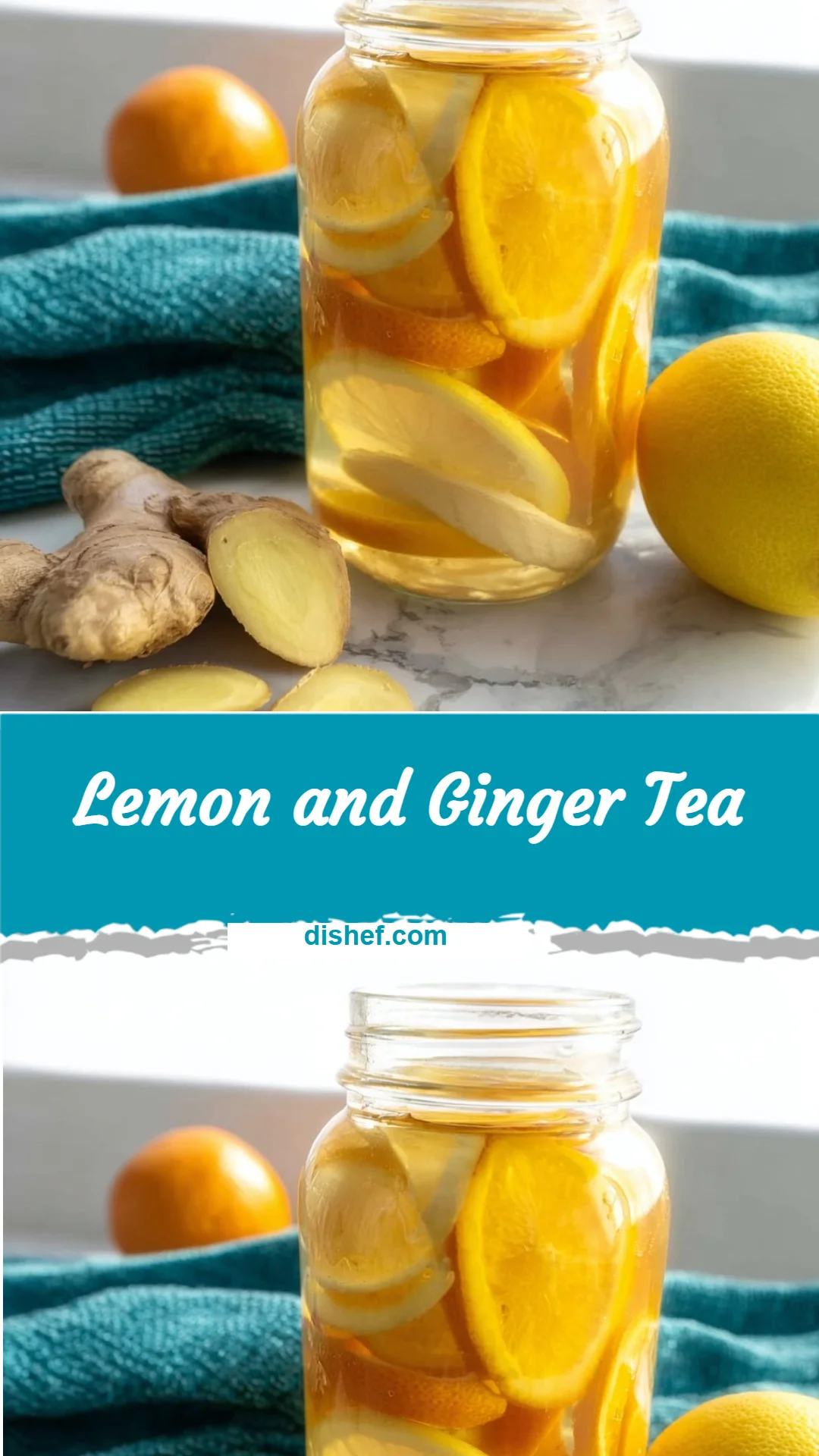
This Lemon and Ginger Tea is easier than it looks, endlessly customizable, and genuinely cozy—perfect for beginners and busy home cooks alike. I love how a few slices of citrus and a knob of ginger can transform hot water into something comforting and restorative. If you’re curious about pre-blended options or need a larger supply of honey-citrus mixes for quick cups, I sometimes explore convenient store-bought choices like Balance Grow Honey Citron and Ginger Tea that can save time without sacrificing that familiar flavor. If you try this recipe, tell me how you like it—did you go bold with extra ginger or add a cinnamon stick? I’d love to hear what worked for you.