Last updated on December 25, 2025
There’s something so heartwarming about the aroma of sautéing vegetables wafting through the kitchen. I can still remember the first time I tried my hand at sautéed peppers and onions. I was a little nervous, worried I might burn them or somehow ruin the whole dish. But oh, was that a glorious failure when I boldly braved the skillet! Those colorful strips of peppers and sweet onions merging with the sizzling sound of the pan didn’t just bring flavor; they reminded me of summer barbecues and family dinners. If you’ve ever found yourself facing the daunting fear of cooking vegetables to perfection or getting stuck overthinking the process, I’m here to reassure you: this post will guide you through making sautéed peppers and onions in a simple, stress-free way. Whether it’s your first attempt or you’re looking to refine your skills, let’s dive right in.
Table of Contents
Why I Love This Recipe of Sautéed Peppers and Onions
This recipe is not just about cooking; it’s about embracing vibrant colors and flavors that can elevate any meal. I love sautéed peppers and onions because they are incredibly versatile—and they can be the star ingredient or the perfect supporting cast. On busy days, when I need something quick yet satisfying, I rely on this recipe.
Beginner cooks will appreciate how simple the steps are. With just a handful of ingredients and a few easy preparations, you can create a dish that feels both restaurant-quality and homey all at once. This recipe exudes warmth, and eating it feels like wrapping yourself in your favorite blanket on a cool evening. Plus, who doesn’t love the sweet, caramelized taste of perfectly sautéed peppers and onions? It’s the ultimate comfort food that can bring a casual weeknight dinner to the next level or impress guests at a dinner party.
Ingredients You’ll Need for Sautéed Peppers and Onions
Before we get to the fun part—cooking—let’s gather our ingredients. Here’s what you’ll need:
Essentials:
- Olive Oil Spray: This will help to sauté your veggies without adding too many calories and delivers that rich flavor.
- 1 Large Onion: Look for a good-sized onion; sweet onions work great if you prefer a hint of sweetness.
- 1 Red Bell Pepper: Fresh and vibrant, red bell peppers add color and sweetness to the dish.
- 1 Green Bell Pepper: A classic companion to the red bell pepper, bringing a slight bitterness that balances out the dish.
- 120 ml Chicken or Vegetable Broth: This is what gives the veggies a lovely depth of flavor when cooking.
- 1 Teaspoon Garlic Powder: Garlic is the flavor powerhouse of this dish. It’s fragrant, savory, and, quite honestly, makes everything better.
- Salt and Pepper: For seasoning, these basics are essential in elevating the flavors.
Optional Add-ons:
- Other Bell Peppers: Feel free to use yellow or orange bell peppers. A mix adds even more colors and subtle flavor variations.
- Spices: A pinch of dried oregano, basil, or even red pepper flakes can give the sautéed peppers and onions a lovely twist.
- Fresh Herbs: If you have them on hand, consider adding chopped fresh herbs like parsley or cilantro at the end for a refreshing finish.
Substitutions and Shortcuts:
- Broth Substitution: If you don’t have broth, water mixed with a splash of vinegar or lemon juice can taste just as good.
- Fresh Garlic: You can replace garlic powder with 1-2 minced garlic cloves; just be cautious not to burn them as they can turn bitter quickly.
- Pre-cut Veggies: If you’re short on time, many grocery stores offer pre-sliced bell peppers and onions. Just be sure to check the freshness!
How to Make Sautéed Peppers and Onions Step-by-Step
Now that we have everything gathered, let’s jump into the cooking process. I promise this is easier than it sounds:
Heat Your Pan: Start by placing a large skillet over medium-high heat. Let it warm up for a minute or two. A properly heated pan is essential for that lovely caramelization.
Spray the Pan: Generously spray the bottom of the skillet with olive oil. You want just enough to cover the base without drenching the vegetables.
Cook the Onions First: Add the sliced onion to the pan first. Sauté them for about 2-3 minutes, giving them time to soften and become translucent. Stir occasionally; you’re looking for them to release their natural sugars.
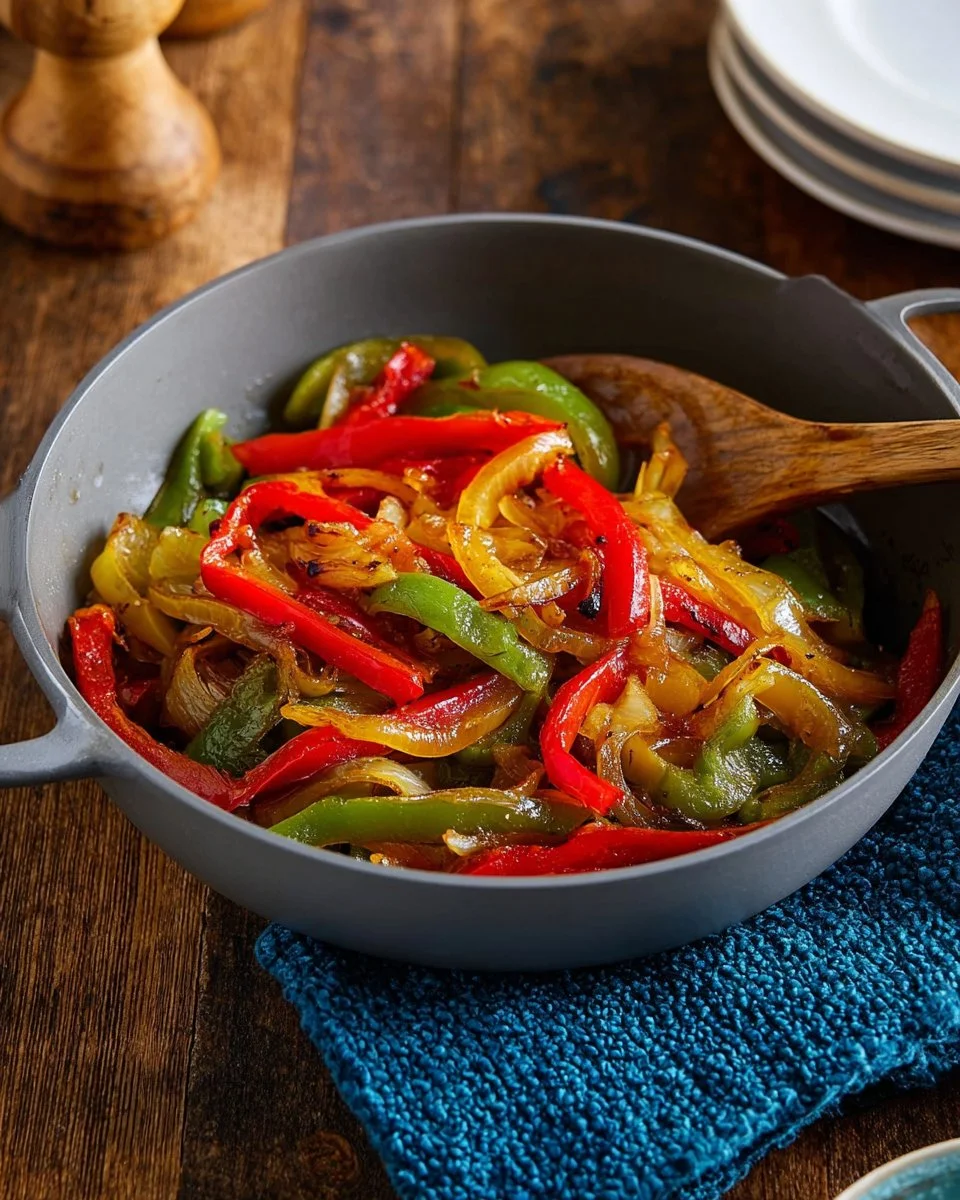
Add the Peppers: Toss in the red and green bell peppers. Continue cooking everything together for another 5-7 minutes until the peppers are tender and beautifully colorful.
Seasoning Time: Sprinkle in the garlic powder, and then stir well. This is where the magic begins—allow the garlic to mingle with the veggies for about 30 seconds.
Add Broth: Pour in the chicken or vegetable broth. Turn the heat up to high and let it come to a vigorous simmer. This step helps deglaze the pan and adds flavor to the veggies.
Caramelize: Allow the mixture to cook until much of the broth evaporates, and the vegetables start to caramelize—about 5-10 minutes. Stir occasionally, ensuring nothing burns at the bottom.
Final Seasoning: When the veggies are beautifully caramelized and saucy, season with salt and pepper to taste.
Serve and Enjoy: Your sautéed peppers and onions are now ready to be enjoyed. Serve them warm and watch how they transform any meal!
Common Mistakes to Avoid
Cooking can be intimidating at times, especially for beginners. Here are essential points to keep in mind to avoid common pitfalls:
Not Prepping Ingredients
In the hustle and bustle of cooking, it’s easy to forget to prep your ingredients beforehand. Cutting your onions and peppers before you start cooking will help keep you organized and ensure you don’t overcook anything.
Overcrowding the Pan
Another common mistake is overcrowding your skillet. If you add too many vegetables at once, they won’t sauté properly. Instead, work in batches if you find it too crowded. This will ensure even cooking and nice caramelization.
Not Timing the Additions
Timing is crucial in this recipe. Make sure to sauté the onions longer before adding peppers; this allows them to soften and sweeten appropriately, ensuring that all components are cooked perfectly.
Serving Suggestions for Sautéed Peppers and Onions
Sautéed peppers and onions can be a delightful addition to many dishes. Consider these ideas for serving:
Tacos and Fajitas
One of my favorite ways to enjoy sautéed peppers and onions is as a filling for tacos or fajitas. The sweet and savory flavors complement grilled chicken, fish, or even beans beautifully. Feel free to add your favorite toppings like salsa, guacamole, or cheese.
On Sandwiches
Add these sautéed delights to your next sandwich or wrap for extra flavor. They pair wonderfully with turkey, grilled cheeses, or roasted veggies.
As a Side Dish
You can also serve them as a side dish alongside grilled meats or roasted vegetables. The colorful medley looks appealing on the plate and adds a burst of flavors to any meal.
Conclusion
There you have it! Making sautéed peppers and onions is indeed easier than it looks. This versatile recipe is not only stress-free but also allows for endless customization according to your tastes. It’s perfect for everyone, especially beginner cooks looking for cozy, classic recipes.
Now that you’ve learned the steps and tips, gather your ingredients and let your cooking adventure begin!
FAQs About Sautéed Peppers and Onions
1. Can I use frozen peppers for sautéed peppers and onions?
Yes, you can use frozen peppers, but they may release more moisture and won’t have the same crispness as fresh ones.
2. What if I don’t have garlic powder?
You can substitute garlic powder with freshly minced garlic. Just sauté it for a short time to avoid burning.
3. Are there any other vegetables I can add?
Absolutely! Feel free to add mushrooms, zucchini, or even corn for added texture and flavor.
4. How do I store leftover sautéed peppers and onions?
Store them in an airtight container in the refrigerator for up to three days. You can reheat them in a skillet or microwave.
5. Can I use this as a base for a stir-fry?
Definitely! Sautéed peppers and onions make an excellent base for stir-fries. Just add your choice of protein and other vegetables to create a complete meal.

Sautéed Peppers and Onions
- Total Time: 25 minutes
- Yield: 4 servings 1x
- Diet: Vegetarian
Description
A simple and versatile recipe for perfectly sautéed peppers and onions that adds vibrant colors and flavors to any meal.
Ingredients
- Olive Oil Spray
- 1 Large Onion
- 1 Red Bell Pepper
- 1 Green Bell Pepper
- 120 ml Chicken or Vegetable Broth
- 1 Teaspoon Garlic Powder
- Salt and Pepper to taste
- Optional: Other Bell Peppers, Spices, Fresh Herbs
Instructions
- Heat a large skillet over medium-high heat.
- Spray the bottom of the skillet with olive oil.
- Add sliced onion to the pan and sauté for 2-3 minutes until translucent.
- Add red and green bell peppers, cooking for an additional 5-7 minutes until tender.
- Sprinkle in garlic powder and stir for 30 seconds.
- Pour in broth and bring to a simmer.
- Allow broth to evaporate and vegetables to caramelize for 5-10 minutes, stirring occasionally.
- Season with salt and pepper to taste.
- Serve warm and enjoy!
Notes
Prep your vegetables beforehand to avoid overcrowding the pan and ensure even cooking.
- Prep Time: 10 minutes
- Cook Time: 15 minutes
- Category: Side Dish
- Method: Sautéing
- Cuisine: American
Nutrition
- Serving Size: 1 serving
- Calories: 150
- Sugar: 6g
- Sodium: 300mg
- Fat: 7g
- Saturated Fat: 1g
- Unsaturated Fat: 6g
- Trans Fat: 0g
- Carbohydrates: 20g
- Fiber: 3g
- Protein: 2g
- Cholesterol: 0mg
Keywords: sautéed vegetables, peppers, onions, easy recipes, vegetarian dishes